
Why Solar Wire Harness Specs Matter
A photovoltaic system is a long-term investment, designed to operate reliably for decades. The solar wire harness is the critical link connecting your solar panels to the inverter and the grid. It must endure extreme temperatures, constant UV exposure, and mechanical stress without failure. Choosing a harness based on price alone can lead to costly downtime, safety hazards, and reduced energy yield. By focusing on these five key specifications, you can ensure your system is built for the long haul. Understanding the technical requirements helps you communicate clearly with your manufacturer, ensuring the final assembly matches your exact application needs.
Conductor Material and Gauge
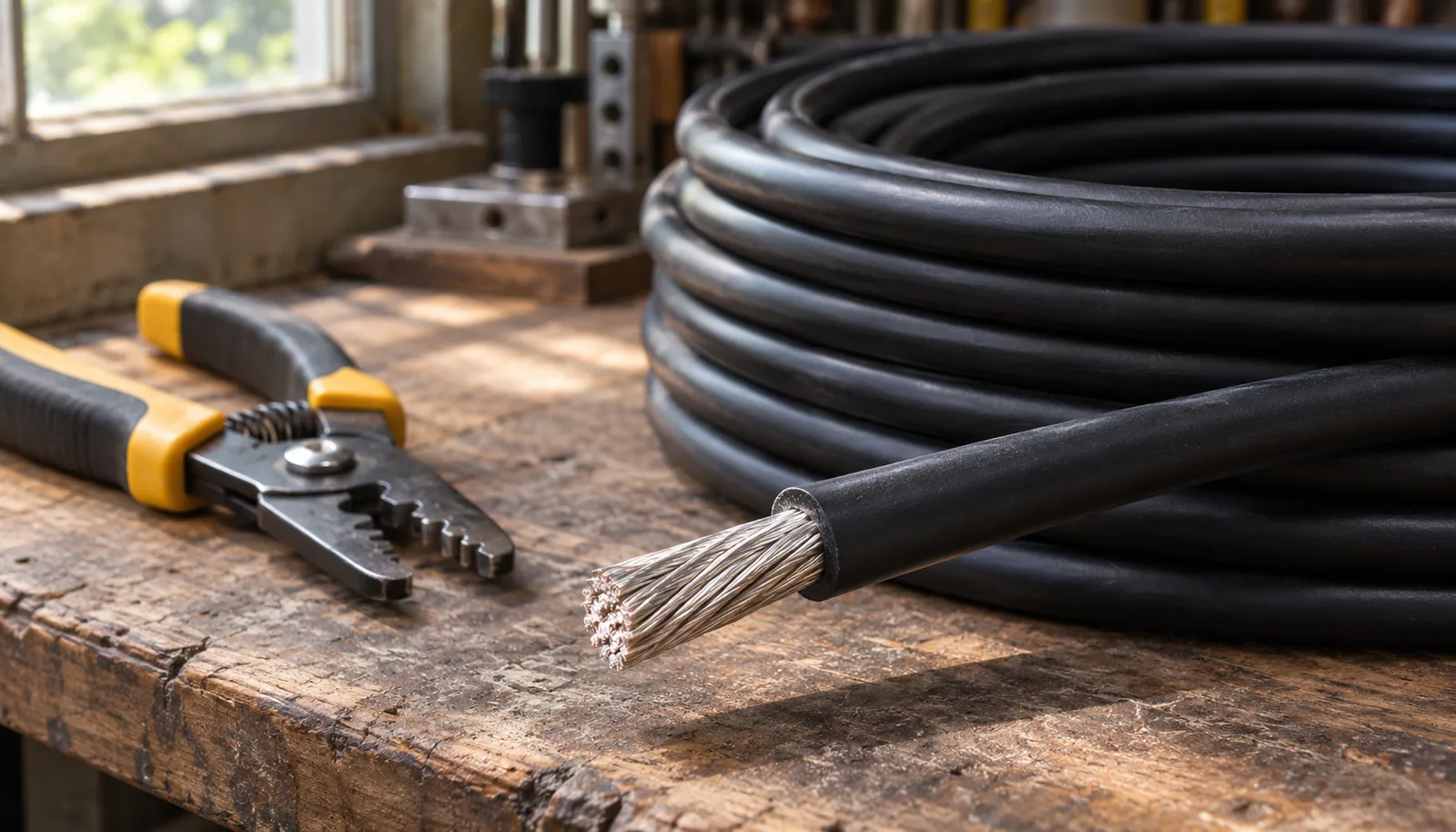
The conductor is the pathway for current. For most solar installations, tinned copper is the preferred choice due to its excellent conductivity and resistance to corrosion. The American Wire Gauge (AWG) must be carefully calculated based on the system's maximum current and the length of the cable run. Undersized conductors cause voltage drop, leading to power loss and heat buildup. Resources from the National Renewable Energy Laboratory frequently highlight the importance of proper conductor sizing for system efficiency. Beyond gauge, consider the stranding class. Fine-stranded wire offers superior flexibility for routing in tight spaces, while coarse stranding may be specified for high-vibration environments. Always confirm the material composition, as aluminum conductors require specific handling and connector platings to prevent galvanic corrosion.
Insulation and Jacket Performance
The insulation layer protects the conductor from the environment and prevents short circuits. Solar wire harnesses require insulation rated for continuous exposure to sunlight. Cross-linked polyethylene (XLPE) is a robust choice, offering high temperature resistance and excellent dielectric strength. Thermoplastic elastomers (TPE) provide greater flexibility in cold weather. Check the dual temperature rating, typically listed as a range like -40°C to +90°C for wet conditions and up to +105°C for dry conditions. The jacket must also resist abrasion, chemicals, and moisture ingress. Meeting standards such as UL 4703 ensures the wire has passed rigorous testing for sunlight resistance, water immersion, and flame propagation. A flame rating of VW-1 or FT1 is a strong indicator of safety in case of a fault.
Connector Quality and Sealing
Connectors are the most common point of failure in a solar wire harness. A high-quality connector system provides a secure, weatherproof seal that maintains its integrity over the system's lifespan. The ingress protection (IP) rating is your first check. An IP67 or IP68 rating means the connector is dust-tight and can withstand temporary or continuous immersion in water. Beyond the seal, examine the contact material. Brass or copper contacts with a robust plating ensure low contact resistance and prevent overheating. The locking mechanism should provide an audible click and a positive mechanical lock to prevent accidental disconnection. Compatibility with standard MC4 interfaces is essential for field flexibility, allowing your harness to integrate seamlessly with a wide range of panels and inverters.
Mechanical Strength and Strain Relief
A solar wire harness is subject to constant physical forces from wind, thermal expansion, and installation handling. Proper strain relief is critical at every junction point where the wire enters a connector or a junction box. Overmolded strain reliefs, a specialty of Wire Harness Manufacturer, bond the cable jacket to the connector body, distributing stress across a wide area and preventing the conductors from pulling out. This integrated protection is far superior to simple screw-on glands. The assembly should also have a clearly defined minimum bend radius. Exceeding this radius during installation can cause micro-cracks in the insulation, leading to eventual failure. Requesting tensile testing data from your manufacturer provides objective proof that your harness can withstand the mechanical demands of its operating environment.
- 📞 Phone
- +1 313 855 3339
Certifications and Testing
Documentation transforms a product from an unknown variable into an engineered solution. A reputable manufacturer operates under a certified quality management system, such as ISO 9001:2015. This certification ensures that every step of the production process, from material receiving to final inspection, follows a controlled and audited procedure. For your solar wire harness, request specific testing reports. Continuity testing verifies that every circuit is complete and correctly wired. Production inspection reports can include visual checks, dimensional measurements, and electrical tests. The Solar Energy Industries Association advocates for robust quality assurance in balance-of-system components. By agreeing on the testing and reporting requirements in your initial brief, you ensure the final product meets your precise acceptance criteria before it ever leaves the factory floor.